
We are a relatively lazy society. We are, and I cannot say that’s necessarily a bad thing. That kind of “laziness” drives us to figure out how to do more things in less time with less effort, which gave way to modern computers as well as other modern technology.
However, there is something that has been on my mind for quite a long time now, and I think it should be on yours as well: The Internet of Things, or IoT for short.
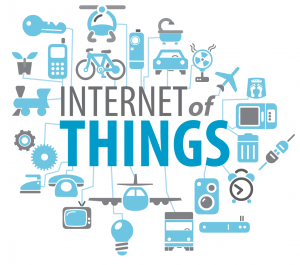
The Internet of Things, for those of you who don’t know, are essentially items in your house that are connected to the Internet. This could be your refrigerator, your toaster, your TV, your lamp, and many other items (including alarm systems). Now I’m not going to get into the nitty-gritty of how this all works, but basically, these household items have a small computer within them that allows them to perform certain actions, like notify you that your toast is ready, check the inside of your refrigerator, turn a lamp on or off, and etc. The possibilities are endless for all that you can do in order to make things a little bit easier for you.
However, with everything, there comes a risk in having these items hooked up to the Internet. What are those risks exactly? Well, they are then susceptible to hackers. This past Friday, a botnet performed a Distributed Denial-Of-Service (DDoS for short) attack on Dyn, which is a DNS provider. DNS is what is used in order to give user-friendly address names (such as twitter.com or facebook.com) and maps that to an IP address, which is where the site is actually located. So because of this, many people found that they could not access many different sites online this past Friday. Why am I telling you this? I am because this botnet was composed mostly of household items that are hooked up to the Internet. Essentially, those that fall under the “Internet of Things”.
What other risks do we have? Well, those same hacks can be performed to turn something on that you did not turn on, access video cameras in your house that you set up, and much more. Unfortunately, for those smaller appliances, it is required to build the computers within them small and simple. Also, they are difficult to update. Because of all of this, when a security vulnerability occurs, those smaller computers do not stand a chance, and prove to be easy targets for botnets such as these.
Now am I saying that you should not have any of these “smart” appliances in your house? No, of course not. They can provide some really nice benefits. Just be aware of the security risks out there. However, no matter what those outside security risks are, the biggest security risk that does exist (and will ever exist) with these appliances is you. Yes, you, the user. Human error is the biggest cause of breaches one way or another, so let’s try to ensure that we are not the cause of these hacks as best as we can.
That’s all for now, until next time…keep that tech gear ticking.
~Goliath7470